
HLP oil
Mobil DTE 20 Ultra
For precision industrial hydraulics.
- For pumps, servo valves and NC machines exposed to deposits, with controlled water separation.
- Match the machine’s requirements.
Oil selection tool
Guide · hydraulic oils
Choose hydraulic oil by class, ISO VG viscosity and machine requirements. Compare specifications and applications across Mobil oils.

In short
Start with the manual: note the oil class and required viscosity. Your chosen hydraulic oil must meet the machine’s requirements. HLP is used in typical industrial hydraulic applications. For cold starts and hot running conditions, consider a high-viscosity-index HVLP oil.
01Oil classifications
Letters describe the oil class; the VG number describes viscosity. Mobil data sheets give DIN 51524 and ISO 11158 classifications to compare with the manual.
Do not replace HLP with HL without the machine manufacturer’s approval.
Reading the designation
HLP 46
Combines an oil class with a viscosity grade. Similar numbers do not make oils interchangeable.
| Classification | Standard | Application scope | Mobil example |
|---|---|---|---|
| HL | DIN 51524-1 | Hydrostatically driven systems under thermal stress and at risk of corrosion, for example from water | — |
| HLP | DIN 51524-2 | As for HL, plus hydraulic pumps and motors requiring anti-wear protection under mixed-friction conditions | DTE 20 Ultra, Nuto H, DTE 10 Excel |
| HVLP | DIN 51524-3 | As for HLP; Mobil data sheets assign this class to high-viscosity-index oils | Univis N, selected DTE 10 Excel grades |
| L-HM / L-HV | ISO 11158 | International classifications listed alongside the corresponding DIN classes | DTE 20 Ultra: L-HM; Univis N: L-HV |
02ISO VG viscosity
ISO VG indicates nominal kinematic viscosity at 40°C, in mm²/s. A higher number means greater flow resistance; suitability depends on the machine requirements.
Choose grade 32, 46 or 68 according to the pump manual. Also consider VI: a higher index means greater viscosity stability as temperature changes.
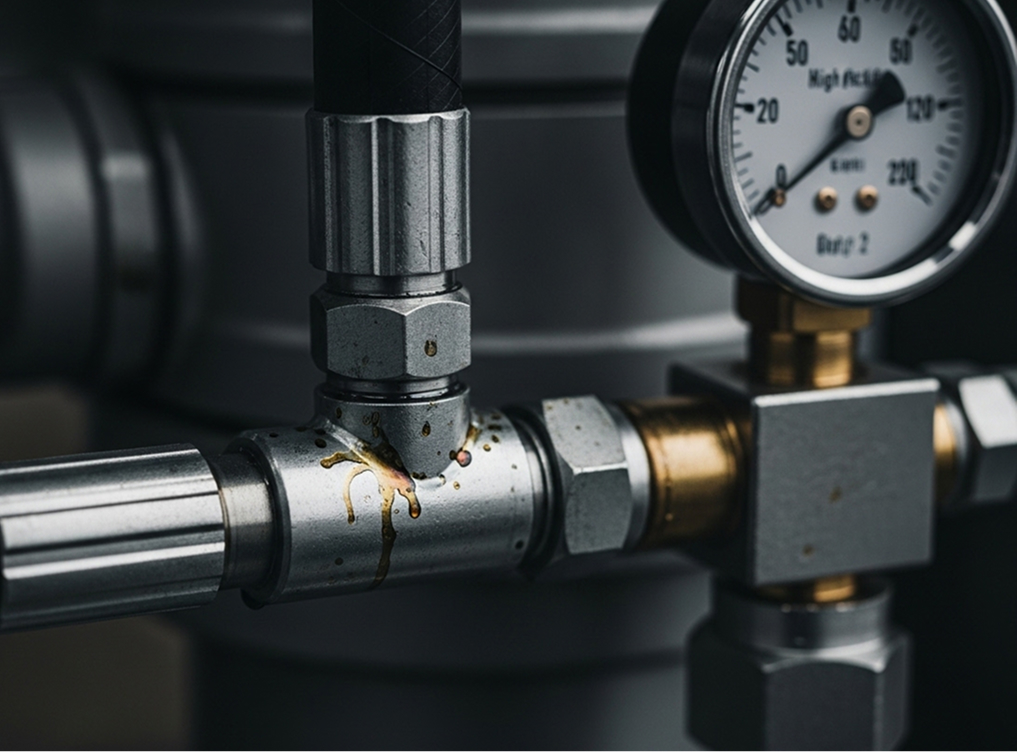
| Product, VG 46 grade | Nuto H | DTE 25 Ultra | Univis N | DTE 10 Excel |
|---|---|---|---|---|
| Data sheet VI | 98 | 110 | 152 | 163 |
Within the same grade, a higher-VI oil retains better cold flow and greater viscosity when hot.
Start with the manual, current product and operating conditions.
Check the machine or pump manual. Note the class, grade and specification before comparing hydraulic oils.
Copy the full name from the drum or product data sheet. A label photograph helps distinguish similarly named series.
A machine may start cold and its hydraulic system run hot. Check whether the manual permits HVLP across that temperature range.
Note servo valves, water exposure or leakage risks.
Check product compatibility before switching series. Ask whether the system needs flushing.
Compare machine requirements with each series’ applications. The cards show viscosity variants and current shop offers.
HLP oil
For precision industrial hydraulics.
HVLP oil
For changing operating temperatures.
Zinc-free oil
For demanding hydraulic systems.
Check compatibility with the machine, operating temperatures and contamination. These five mistakes can undermine selection and condition assessment.
Mistake
Instead:
Check the oil class and compatibility before mixing.
Mistake
Instead:
The manual remains the reference.
Mistake
Instead:
Compare VI and temperature requirements too.
Mistake
Instead:
Follow the manufacturer’s recommendations and monitor oil condition through testing.
Mistake
Instead:
Include water and solid particles in your assessment of the hydraulic system.
Have a similar case?
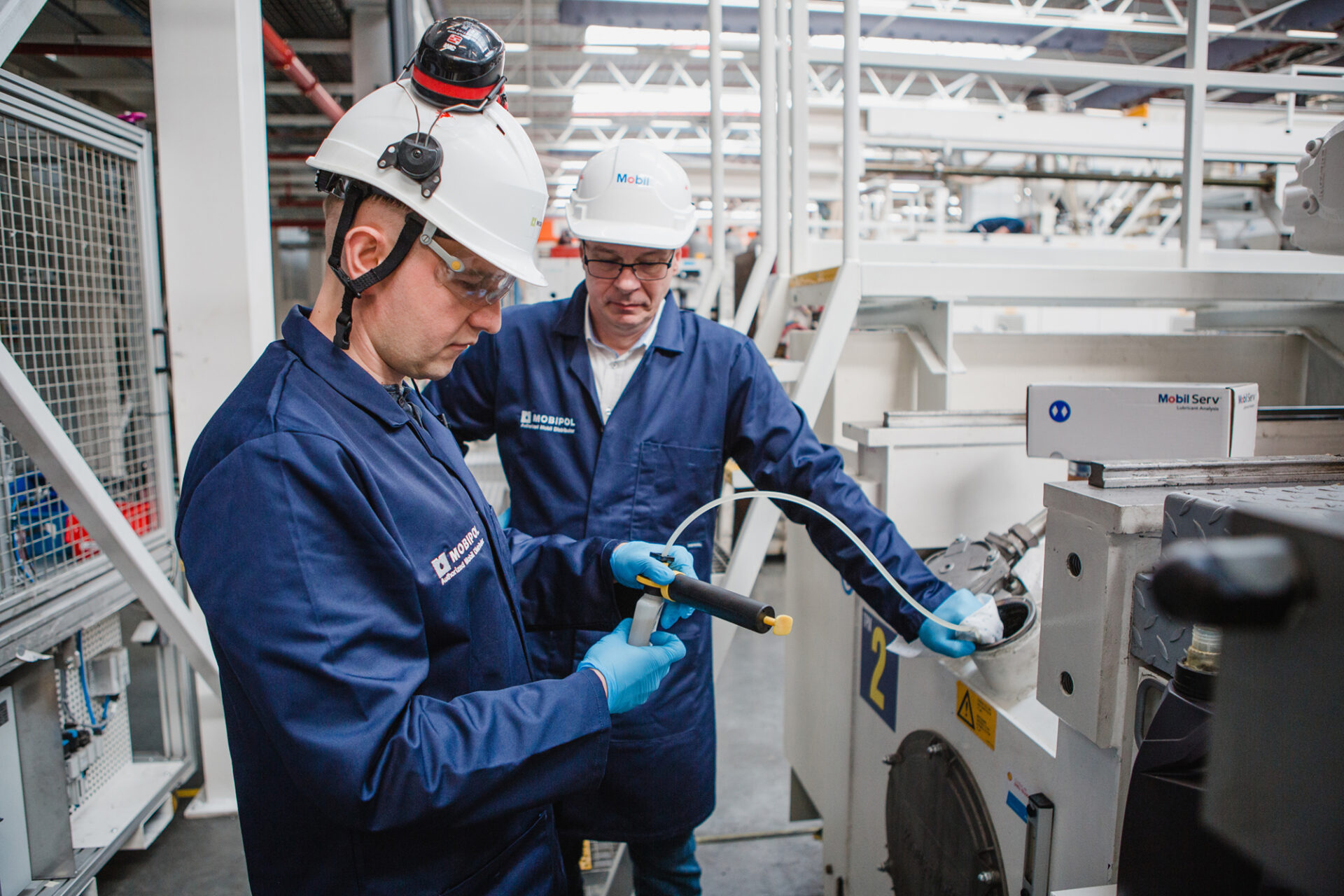
Base oil changes on oil condition and the machine manufacturer’s recommendations. Sampling every 3 months or 500 operating hours is a starting point, not a drain interval.
A good result does not automatically extend the drain interval. Analysis includes:
Provide the machine model, pump type and current oil. Our specialist will compare the requirements and reply with a specific product recommendation.

Technical Engineer for Lubricants, Mobipol
“Tell me the machine, pump type and current oil. I will say whether HLP is enough or a high viscosity index oil is the better choice.”
Do not top up with a different series without checking compatibility. Even similar classes and grades are not enough; ask an expert or the machine manufacturer before switching.
HLP suits typical industrial hydraulic applications that meet its requirements. For cold starts and hot operation, consider HVLP, such as Univis N; compare the classes in the table.
The HL standard covers thermal loading and corrosion risk. HLP also addresses anti-wear protection for hydraulic pumps and motors operating under mixed-friction conditions. The manufacturer specifies the required class.
It identifies class L-HV under ISO 11158 and viscosity grade VG 46. The Univis N data sheet lists L-HV alongside DIN 51524-3.
Follow the manufacturer’s recommendations and monitor oil condition through testing. Sampling every 3 months or 500 hours is a starting point for analysis, not a universal oil-change interval.
Appearance and smell are not enough for a diagnosis. Analysis checks water, particles, metals and changes in oil properties; assess the result alongside the equipment’s history.
Check the machine’s hydraulic system requirements; Univis N also covers mobile applications. UTTO transmission-hydraulic oils for tractors and agricultural machinery require separate selection.